
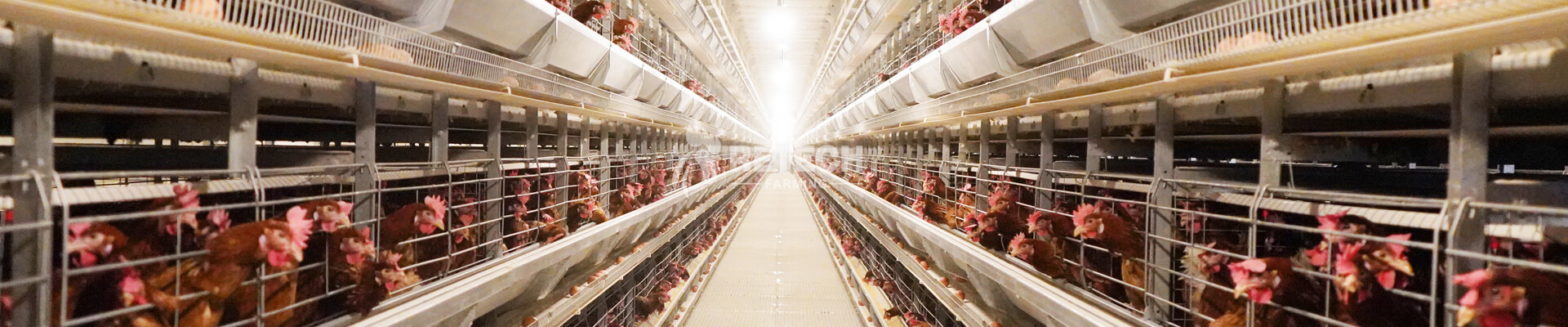
While small-scale poultry farming can rely on the experience and daily manual checks of the farmer, a farm with 10,000 birds requires more standardized, digitized, and process-oriented management. Without this, an increase in flock size can quickly lead to higher mortality rates, greater feed waste, water-related issues, and mounting pressure to sell the produce.
This article explores the key management shifts that occur when scaling up from 5,000 to 10,000 birds, and offers guidance on how poultry farmers in Africa can navigate this expansion more securely.
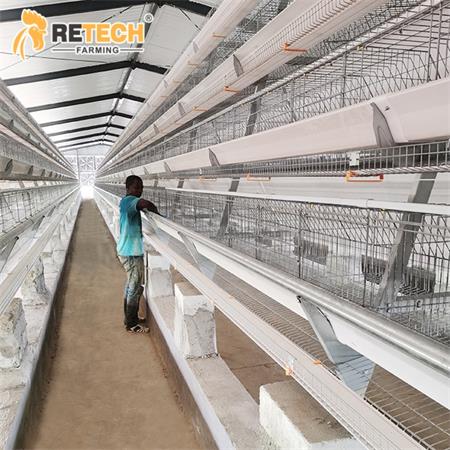
From “Primarily Manual” to “Semi-automated/Automated”
For a flock of 5,000 chickens, 2–3 workers can handle feeding, watering, egg collection, and manure removal.
For a flock of 10,000 chickens, relying solely on manual labor prevents any gains in farming efficiency. Key equipment upgrades include:
• Automated watering lines;
• Automated feeding lines;
• Automated ventilation and temperature control;
• Backup power supply;
• Data recording systems.
8 Key Focus Areas for Upgrading and Managing Poultry Farming Equipment
1. Poultry Houses and Ventilation/Cooling Equipment
In Senegal, northern Nigeria, and coastal Kenya, high temperatures and high humidity are the primary challenges.
While a flock of 5,000 birds might rely on natural ventilation, a flock of 10,000 birds typically requires:
• Longitudinal or tunnel ventilation;
• Large-diameter exhaust fans;
• Evaporative cooling (cooling pad) systems;
• Insulated roofing;
• Misting/fogging systems;
• Temperature alarm systems.
In Zambia, where there is a significant temperature difference between day and night, thermal insulation must also be considered during the winter. Equipment should be capable of both cooling and maintaining warmth.
2. Automatic Watering Systems
3. Automatic Feeding Systems
4. Power Supply and Backup Systems
• Diesel generators;
• Solar hybrid power systems;
5. Manure Removal and Waste Treatment
10,000 laying hens produce a large volume of manure daily. Manual manure removal is not only slow but also increases the risks of ammonia accumulation and disease.
Available equipment options:
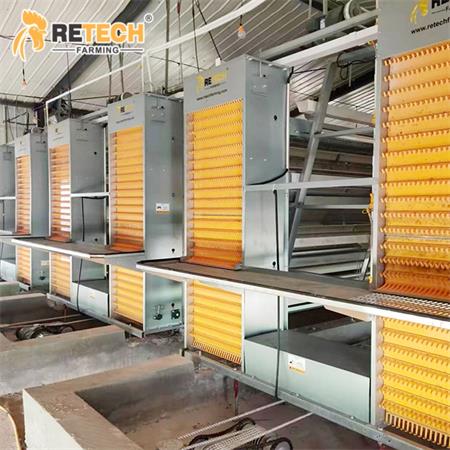
• Manure scrapers;
• Conveyor belt manure removal systems
Recommended Cage Equipment for Rearing 5,000–10,000 Chickens
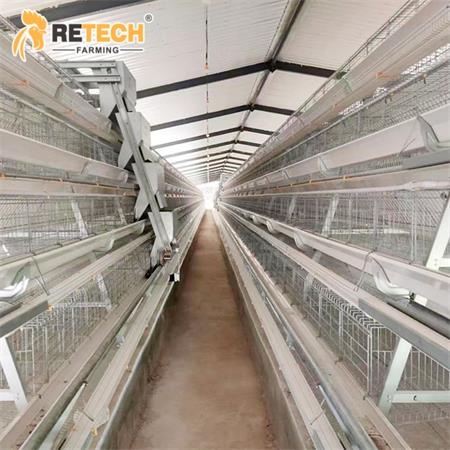
Retech’s automated 3–4 tier A-type layer cages are constructed using high-quality Q235 steel.
The system features fully automated feeding, drinking, egg collection, manure removal, and environmental control. Each unit can accommodate 120–160 chickens; the equipment specifications are as follows:
| Model | RT-LCA3120 | RT-LCA4160 |
| Tiers | 3 | 4 |
| Door/set | 4 | 4 |
| Birds/door | 5 | 5 |
| Capacity/set | 120 | 160 |
| Size(L*D*H)mm | 1800*495*430 | 1800*495*430 |
| Area/bird(cm²) | 446 | 446 |
Are you planning to expand your poultry house? If you have any questions regarding equipment selection or facility retrofitting, please leave a comment, and I will provide you with tailored recommendations for your expansion project.
Whatsapp:+8617685886881
Email:director@retechfarming.com
FAQ: Common Questions on Scaling from 5,000 to 10,000 Chickens
Q1: How many people are needed for 10,000 chickens?
For a semi-automated setup, typically 3–5 people are required. With a high level of automation, 1–2 people—plus a farm manager and a maintenance technician—are sufficient. The key is not the headcount, but rather the division of labor and the reliability of the systems.
Q2: Should I house 10,000 chickens in one building, or split them into two buildings of 5,000 each?
This depends on the available floor space. Housing 10,000 chickens in a single facility equipped with modern farming technology generally makes management and egg collection more efficient.
Q3: How large should a poultry house for 10,000 chickens be?
For broilers raised on the floor in tropical climates, you typically need about 1,000–1,250 square meters; for layers in cages, about 500–650 square meters. The exact requirement depends on the breed, local climate, and the specific equipment used.
Q4: Should I upgrade the watering system or the feeding system first?
Prioritize the watering system. Inadequate water access affects a flock more rapidly and severely than a delay in feeding.
Q5: Is automated equipment worth it in Africa?
It is worthwhile, provided there is a reliable power supply, access to maintenance expertise, and a stable market. Alternatively, you could start with semi-automated equipment, a solar photovoltaic system, and a backup generator, then upgrade incrementally.
Post time: Oct-18-2026


