How can one scale up broiler farming operations while simultaneously controlling operating costs and enhancing overall efficiency? For broiler farms aiming to expand, this is not merely a matter of business strategy—it is a critical factor that will determine their future competitiveness.
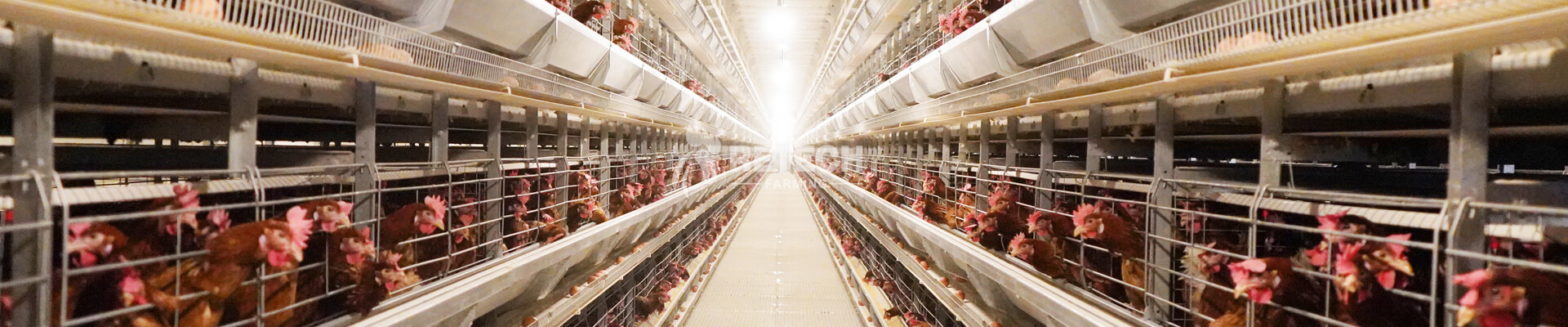
With years of deep involvement in the Philippine poultry market, Retech Farming leverages extensive project experience and proven equipment solutions to provide efficient, stable, and energy-saving farming systems to numerous local broiler farms. Through offerings such as chain-type broiler cages, multi-tier breeder cages, automated manure removal systems, and fermentation-based manure treatment solutions, Retech helps clients scale their operations while effectively managing costs related to labor, space, and environmental compliance.
First, gain a clear understanding of the cost structure.
Expanding production is not merely a matter of “building more poultry houses and bringing in more batches of chicks.” If the poultry house equipment, ventilation, manure removal systems, and waste treatment capacity are not upgraded in tandem, a larger scale could actually lead to higher costs—specifically regarding labor, medication, environmental compliance, and losses from mortality or culling.
In the Philippines, the costs associated with broiler farming primarily include:
• Feed costs (typically the largest expense);
• Costs of chicks;
• Labor costs;
• Electricity, ventilation, and cooling expenses;
• Veterinary medicines and vaccines;
• Depreciation of poultry houses and equipment;
• Manure treatment and environmental compliance costs;
• Hidden losses resulting from mortality and culling rates.
The core of scaling up is not simply increasing the number of birds on-site, but rather establishing a system characterized by automated equipment, a controllable environment, and the conversion of manure into a usable resource.
Insights from Broiler Projects in the Philippines: Equipment Automation Is Key to Cost Control
In broiler farming projects in the Philippines, Retech has observed that many clients are less concerned with “whether they can expand” and more focused on “how to manage, save costs, and ensure stability after expansion.” Addressing this, Retech provides systematic solutions for local broiler farms, centered on reducing reliance on manual labor through automated equipment.
1. Chain-type broiler cages enhance space utilization
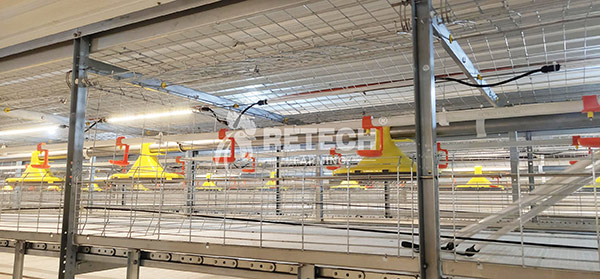
Within the same poultry house footprint, chain-type broiler cage systems effectively increase stocking density and space efficiency. Compared to traditional free-range or floor-rearing methods, cage-based systems facilitate standardized management and are more easily scaled up.
2. Automated manure removal systems reduce manual labor
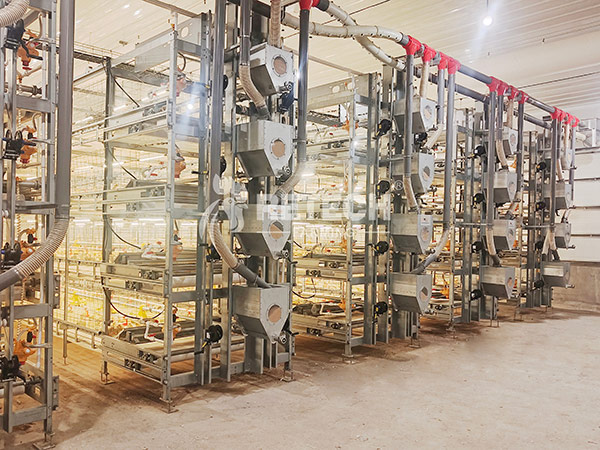
In large-scale broiler operations, manure management is a critical aspect of daily routine. Automated manure removal systems and integrated processing solutions reduce the frequency of manual cleaning, lower labor intensity, and improve environmental hygiene.
3. Fermentation tank solutions lower environmental and processing costs
Retech’s energy-efficient fermentation tanks are already in use at several broiler farms in the Philippines, handling waste from large-scale poultry houses. Through fermentation, poultry manure is not only deodorized and sanitized but also repurposed as a resource, easing the burden of downstream waste management.
4. Multi-tier breeder cages optimize operations for breeder farms
For breeder operations, multi-tier cages enable more efficient breeding management within a limited footprint, providing a stable foundation for the expansion of the entire industry chain.
A Phased Approach for Philippine Broiler Farms to Scale Up and Control Costs
Phase 1: Assess Existing Facilities and Address Bottlenecks
Identify the primary constraints to scaling up—whether they are housing space, labor, ventilation, manure removal, or waste management. For many broiler farms in the Philippines, the challenge is not a lack of space, but rather issues with manure management and the internal environment of the poultry houses.
Phase 2: Upgrade to Chain-type Cages and Automated Manure Removal
Implement chain-type broiler cages and automated manure removal systems to increase stocking density and operational efficiency, reduce labor requirements, and improve the internal environment. This is the most direct step toward expanding production capacity.
Phase 3: Implement Ventilation, Cooling, and Environmental Control
As the scale of operations grows, so do the levels of heat, humidity, and ammonia emissions. It is essential to simultaneously upgrade ventilation and cooling systems to ensure that increased stocking density does not lead to a decline in performance.
Phase 4: Centralize Manure Management with High-Efficiency, Energy-Saving Fermentation Tanks
Once the flock size approaches or exceeds 100,000 birds, consider adopting centralized fermentation tanks. This allows for the conversion of manure into organic fertilizer, easing environmental compliance pressures while creating an additional revenue stream.
Phase 5: Standardize and Replicate for Steady Expansion
Standardize facility design, equipment configurations, ventilation parameters, manure removal schedules, and fermentation processes. Replicating these standardized models in new poultry houses helps minimize the risks associated with scaling up.
For broiler projects in the Philippines, the Retech team develops customized solutions—factoring in the local climate, farm scale, existing facility conditions, and expansion plans—to help clients strike the right balance between scaling up operations and controlling costs. Click here to receive a farming solution for a flock of 60,000–80,000 birds.
Post time: Oct-19-2026


