
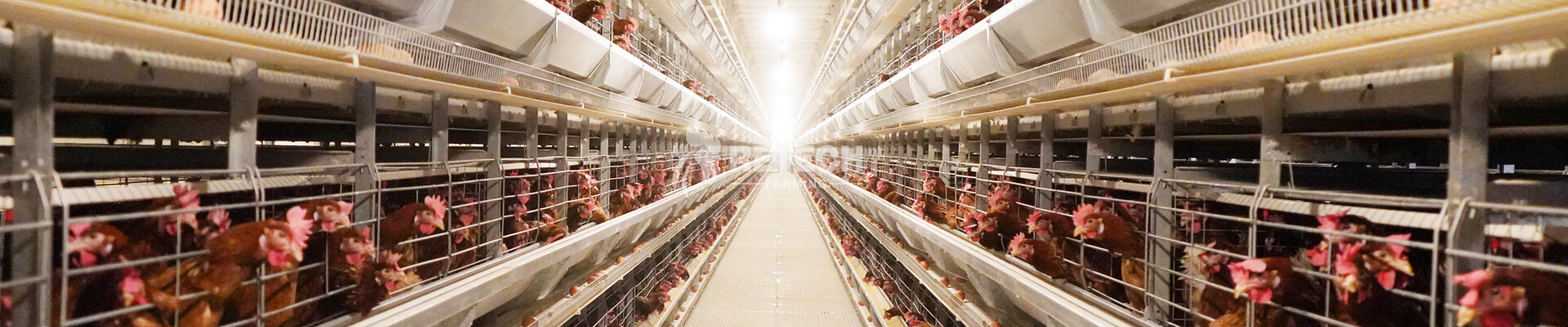
In the broiler farming industry, the rearing period is often referred to as the “first hurdle”. This is not only because the chicks’ immune systems are weak and their adaptability is poor right after hatching, but also because if the management is inadequate during this stage, it will directly affect the growth performance of the entire batch of chickens in the future.
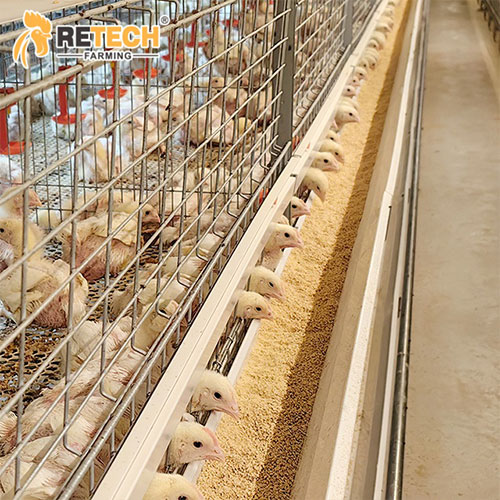
Many chicken farms encounter similar problems:
- High mortality rate during the rearing period
- Poor uniformity of the flock
- Weak chicks cannot get food
- Inconsistent temperature and humidity control
- High mortality rate within one week
These issues may seem scattered, but in fact they all point to the same core issue: inadequate brooding farm management has led to the failure of the basic development of the chicken flock.
1.Why is the rearing period the most prone to problems?
When chicks enter the rearing stage, their various bodily functions have not yet fully developed, especially:
- The immune system is weak
- The ability to regulate body temperature is poor
- They are sensitive to environmental changes
- There is a high risk of dehydration
- The absorption of yolk is unstable
If the temperature and humidity in the chicken coop are not properly controlled, the following problems may occur:
- Getting chilled
- Heat stress
- Insufficient water intake
- Poor yolk absorption
- Inconsistent feeding
- Increased mortality rate
Especially in the 7 days prior to the brooding process, the flock is the most sensitive to environmental and management changes. Even the slightest fluctuations can escalate into significant losses.
Question 1: Uneven temperature, with repeated occurrences of cold and heat stress.
Question 2: Uneven grouping, weak chicks unable to obtain food
Therefore, brooding management should not merely focus on “whether there is feed provided”, but rather should consider whether each chicken can consistently obtain food, water and grow healthily.
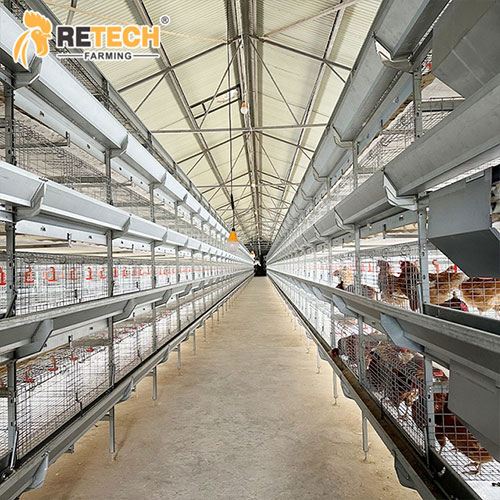
2.The environmental control system in the chicken houses of Retech Farming: Keeping the temperature difference within 0.5℃.
For the most critical temperature issue during the brooding period, Retech’s zone-specific precise environmental control system provides a more stable solution.
1.Multiple sensors, real-time perception of environmental changes
The equipment adopts a multi-point sensor layout method, which can monitor the temperature and humidity changes in different areas of the chicken coop in real time, avoiding the neglect of local overheating or undercooling.
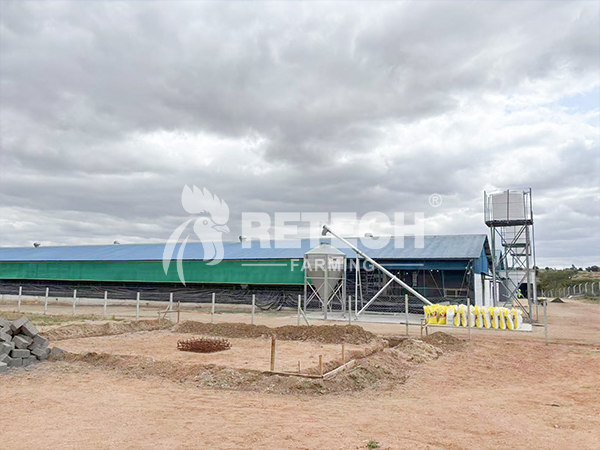
2.Uniform air supply duct design to reduce uneven temperature distribution
By optimizing the ventilation duct structure, the heat can be distributed more evenly within the chicken coop, reducing the temperature differences among the inner, middle and outer zones.
According to the scenario description, the temperature difference can be controlled within 0.5℃, which is extremely crucial for the brooding stage.
3.Chicks no longer gather in groups, and yolk absorption becomes more efficient.
When the temperature in the chicken coop is stable and the space is comfortable, chicks will not gather together due to cold or heat. Their activities and rest are more balanced, and the yolk absorption rate will significantly increase. This means that the chicks will develop more uniformly in the later stage.
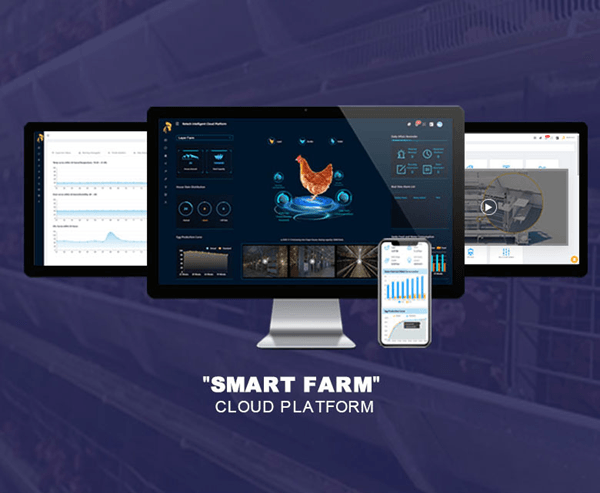
Automatic feeding line: Ensuring even the weakest chicks can get food.
Apart from temperature, another key factor during the brooding period is feed uniformity.
The automatic feeding system provided by Retech can, in the early stage of brooding, automatically adopt a feeding method with high frequency and small amounts but multiple meals, based on the density of the chickens.
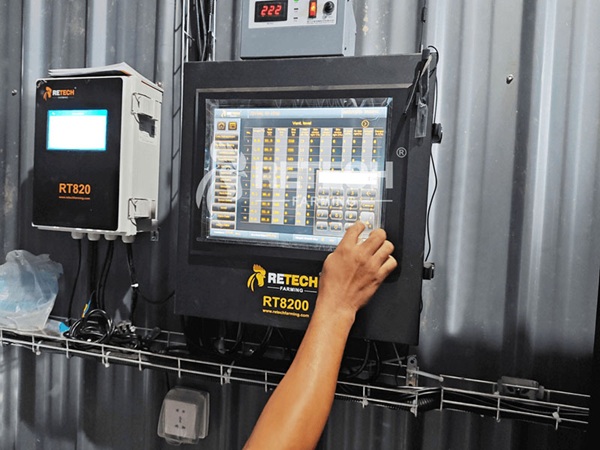
The advantages of automatic feeding system:
- Increasing the feeding opportunities for weak chicks
- Reducing pecking and crowding
- Ensuring more balanced use of the feed trays
- Helping the flock establish a more stable feeding habit faster
- Improving overall uniformity
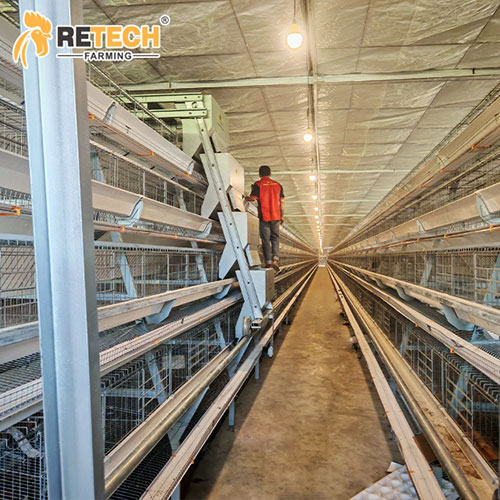
For pullet farms, this “small amounts frequently, as needed” feeding method is more in line with the physiological needs of chicks at this stage compared to the simplistic approach of providing a single large feeding.
Post time: Jun-29-2026


