
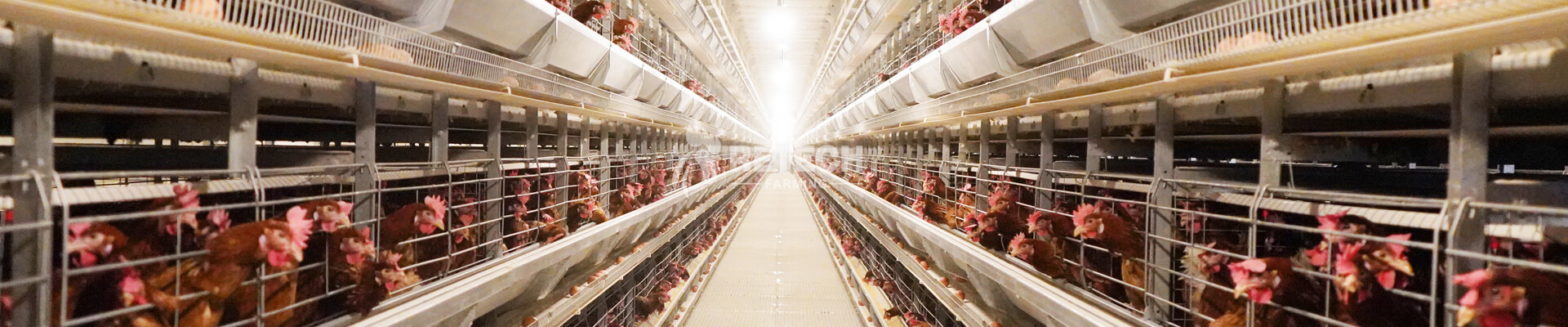
In commercial egg production, H-type and A-type layer cages are the two most common options. Both systems allow for the efficient rearing of laying hens, yet they differ in terms of structure, level of automation, space utilization, labor requirements, and initial investment.
So, which layer cage system is the best choice for your farm in Africa?
1. What Are H-Type and A-Type Layer Cage Systems?
Before comparing their respective advantages, it is first necessary to understand how these two types of poultry farming systems operate.
What is an H-type layer cage system?
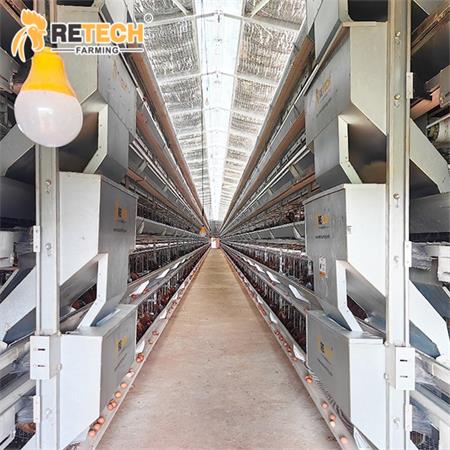
The H-type layer cage system is a modern, vertically arranged poultry farming system designed primarily for medium- to large-scale commercial egg production. When viewed from the side, the structure resembles the letter “H.” Retech’s H-type layer cage systems consist of 3 to 12 tiers.
These systems are typically equipped with automated machinery for processes such as feeding, watering, egg collection, manure removal, and environmental control.
Key features of H-type layer cages:
- Multi-tier cage structure, offering high stocking capacity.
- Automated feeding system, reducing manual labor.
- Nipple-type drinking lines, ensuring a stable water supply.
- Optional automatic egg collection conveyor belts.
- Optional manure removal belts or other manure management systems.
- Compatible with integrated ventilation and environmental control equipment.
H-type layer cages are suitable for standardized, commercial-scale poultry farms.
What is an A-frame layer cage system?
The A-type layer cage system is named for its shape, which resembles the letter “A,” with the cage tiers arranged in a stepped (staircase-like) configuration. These systems typically consist of 3 or 4 tiers.
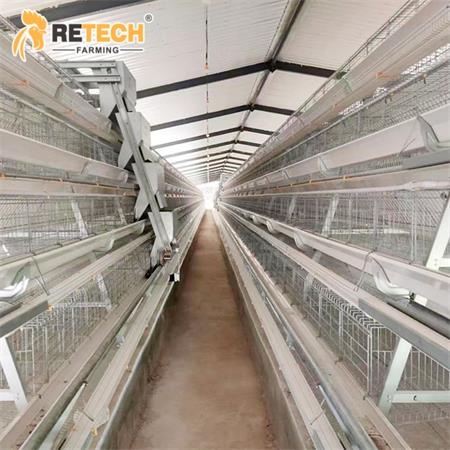
A-frame layer cage systems offer various configuration options; poultry farms can select manual, semi-automated, or fully automated auxiliary equipment based on their specific needs and budget.
Key features of the A-type layer cage system include:
- A simple and practical cage structure.
- Ease of access for daily inspection and maintenance.
- A relatively lower initial capital investment compared to other systems with similar configurations.
- Availability of manual or automated feeding and watering systems.
- Flexible manure collection solutions that can be adapted to different poultry house designs.
- Suitability for farms with limited capital or those operating on a moderate scale.
For those entering the commercial egg-laying business for the first time, the A-frame layer cage system serves as a practical and viable starting point; it does not require the high level of automation found in fully equipped H-type systems.
How should you make your decision? (Advice from a professional project manager at Retech)
Before starting your project, please provide the following information to your project manager:
1. What is your target farming scale?
If you plan to house fewer than 10,000 birds, A-type cages offer the best cost-performance ratio. If your target is 20,000 birds or more, the long-term operational cost advantages of H-frame cages become very significant.
2. What is the status of your power supply and technical support?
H-type systems rely heavily on automated equipment; if the power supply in your area is unstable, we recommend installing a backup generator or opting for an A-type system.
3. What are your labor costs?
In regions with high labor costs, the savings on wages achieved through the automation of H-type cages can typically offset the higher initial equipment investment within 2–3 years.
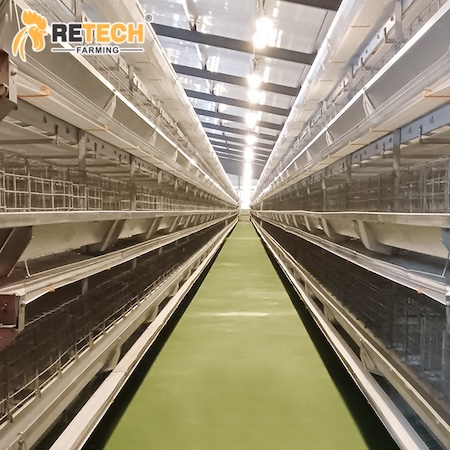
To be more specific, when should you choose A-type cages, and when should you choose H-type cages?
A-type layer cages are better suited for farms that:
• Have a flock size between 5,000 and 15,000 birds;
• Have limited initial capital and need to see cash flow quickly;
• Are located in areas with an unstable power grid and lack backup power sources;
• Benefit from low labor costs;
• Wish to upgrade existing poultry houses without requiring major structural modifications.
H-type layer cages are better suited for operations that:
• Plan for a flock size of 20,000 birds or more and aim for higher stocking density;
• Have a reliable power supply, or are prepared to invest in solar power or backup generators;
• Face high labor costs or difficulty in retaining a stable workforce;
• Seek to implement fully automated systems for egg collection, feeding, and manure removal;
• Intend to make a long-term investment (5 years or more).
If you are currently in the process of upgrading from an “A-frame” to an “H-frame” system, we recommend the following approach: first establish your A-frame farm, and then design any additional poultry houses according to the H-frame standard. Many of our African clients have successfully used this upgrade strategy to transition from small-scale, family-run farms into larger, commercial-scale enterprises.
Why do layer farms often expand their brooding farm at a later stage?
Many layer farm owners initially focus primarily on the egg-laying phase. However, as their operations mature, they often come to realize that:
Raising their own replacement pullets is more cost-effective than continuously purchasing young birds from external sources, and it allows for better control over the quality of the stock.
Consequently, an increasing number of layer farms choose to add brooding facilities, establishing an integrated system that spans from the brooding stage all the way to egg production.
Key benefits of expanding brooding facilities:
• Cost Control: Raising your own birds significantly lowers the expense of acquiring pullets and reduces losses caused by stress during transportation.
• Biosecurity: Managing the entire lifecycle—from chick to mature hen—effectively mitigates the risk of introducing diseases from external sources.
• Quality Assurance: You can precisely monitor and manage the growth and development of the birds according to your own specific standards, which helps boost egg production rates during the peak laying period.
• Establishing a complete production chain: Brooding → Rearing → Egg Production
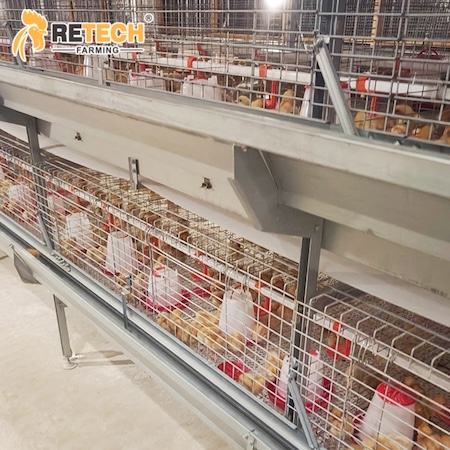
This model is particularly important for the African market. In some regions, where the supply of chicks is unstable, transport distances are long, and the risk of disease is high, having on-farm brooding facilities can enhance the overall stability of the poultry farming operation.
Professional Recommendations for Brooder House Expansion:
• Equipment Suitability: The brooding stage demands precise temperature and environmental control. It is recommended to use specialized brooder cage systems, which feature higher-density mesh flooring and are equipped with dedicated drinkers and feeders to effectively prevent chicks from escaping or sustaining injuries.
• Space Planning: When planning the expansion, ensure the “all-in, all-out” management model is incorporated. We advise maintaining physical separation between the brooder house and the adult poultry houses to ensure robust biosecurity.
• System Compatibility: If your existing adult poultry facilities utilize an H-type cage system, it is advisable to equip the brooder house with H-type brooder cages. This facilitates standardized management processes and simplifies the future integration of automated equipment.
What is the relationship between a pullet farm and a layer cage system?
Many clients focus exclusively on layer cages during the initial stages; however, the planning of a brooding facility significantly impacts the future expansion efficiency of a layer farm.
If you plan to add a brooding facility later, consider the following points during the initial project design phase:
1. Incorporate space for future expansion in the site layout
When constructing a layer farm, it is best to designate space for a brooding facility, isolation unit, warehouse, feed storage area, and office space to avoid redundant construction during future expansions.
2. Ensure equipment systems facilitate zone-based management
Because the brooding, rearing, and laying stages have different requirements for temperature, stocking density, feed, water, and ventilation, the farm should be organized into distinct zones to reduce the risk of cross-contamination.
3. Plan power supply, water supply, and ventilation in advance
Brooding facilities require more precise environmental control—especially in the high-temperature climates of Africa—making a stable power supply and an effective ventilation system critical.
4. Ensure a seamless transition between the replacement flock and the laying system
A well-designed system facilitates a smooth transition from the brooding phase to the laying house, minimizing stress and improving future egg production rates.
If you are looking for layer cages, brooding equipment, broiler cages, automatic feeding systems, automatic drinking systems, or comprehensive poultry house solutions in Africa, we invite you to reach out and discuss your specific project requirements.
Based on your site, budget, flock size, future expansion plans, and target market, we provide a one-stop solution—covering everything from equipment selection and price quotations to installation.
Please contact us to receive a tailored, comprehensive plan for your poultry farm.
Post time: Oct-18-2026


