
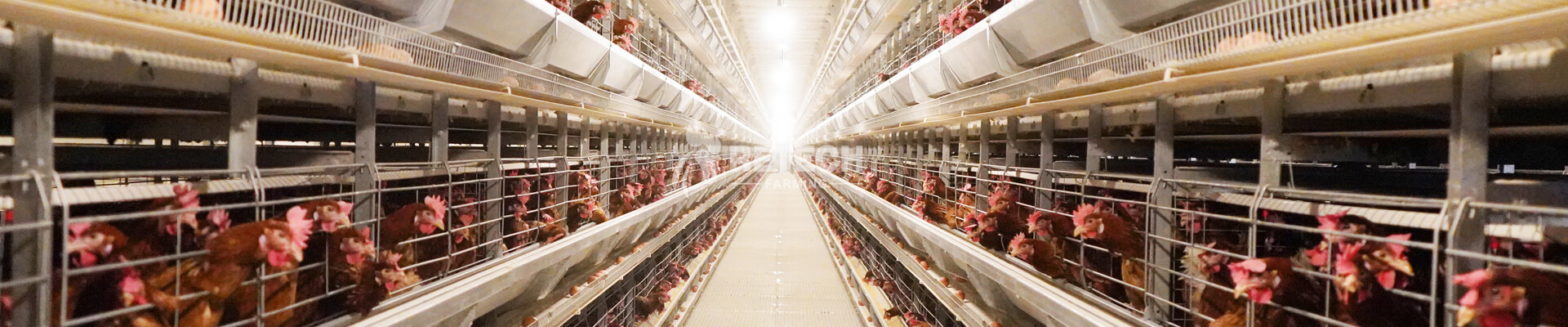
As a farm manager overseeing a poultry operation in Africa, I have witnessed the losses caused by power outages all too often: when the ventilation fans stop, temperatures in the poultry houses spike; automated feeding lines jam, leading to uneven feed intake among the flock; egg collection belts cease to function, causing eggs to pile up and break; and in the brooding area, temperatures drop, forcing chicks to huddle together, which leads to chilling and an increase in mortality rates.
To address this, we moved beyond relying solely on the power grid and developed a hybrid backup power system—integrating solar energy, battery storage, the utility grid, and a generator.
In this article, I will guide you through the process of designing a truly practical backup power solution for a poultry farm.
How should a sound backup power system for a poultry farm be designed?
An effective backup power solution is not merely a collection of equipment; rather, it requires a well-engineered design tailored to the scale of the operation, equipment load, frequency of power outages, and available budget.
Step 1: Assess your electrical load
You first need to list all electrical equipment used on the poultry farm, including:
• Ventilation fans
• Lighting
• Automatic water pumps
• Automatic feeding systems
• Incubators
• Heating/thermal equipment
• Monitoring/surveillance equipment
• Electricity for office and living areas
Step 2: Determine which equipment must remain powered
Not all equipment requires a continuous, 24-hour power supply. Poultry farms should prioritize the following critical systems:
Highest Priority
• Ventilation systems
• Watering systems
• Brooding/heating systems
• Essential lighting
• Incubation systems
Secondary Priority
• Automated feeding systems
• Auxiliary exhaust and cooling systems
• Monitoring equipment
Non-urgent (can be deferred)
• Office equipment
• Non-essential lighting
• Charging for maintenance tools
This approach ensures that the backup power system is both more cost-effective and more practical.
Step 3: Adopt a “Main Power + Backup Power + Energy Storage” Configuration
The most practical solutions typically follow these structures:
Option 1: Grid + Generator
Suitable for:
• Locations with an unstable grid connection
• Projects with limited budgets
• Sites requiring high-capacity emergency power
Option 2: Grid + Solar + Battery Storage
Suitable for:
• Operations with short-duration power outages
• Those looking to reduce long-term electricity costs
• Farms prioritizing energy efficiency and environmental sustainability
Option 3: Grid + Solar + Battery Storage + Generator
This is the most comprehensive and stable solution, ideal for:
• Medium-to-large-scale layer farms
• Brooding facilities
• Hatcheries
• Operations highly sensitive to the risks of power outages
This combination strikes a balance between daily power consumption, nighttime energy supply, and emergency backup during outages.
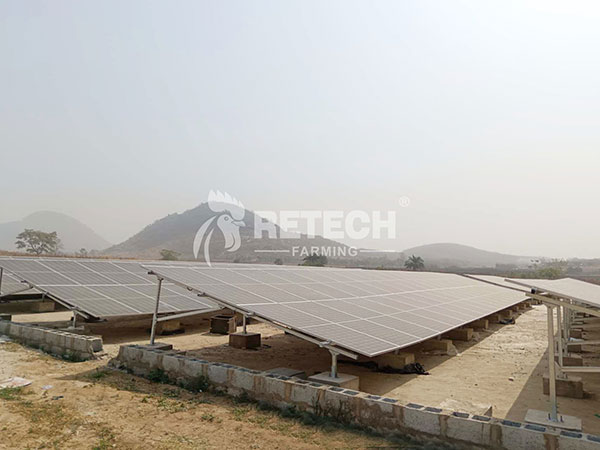
Retech has already designed a solar photovoltaic (PV) energy storage system for a 40,000-bird layer farm in Nigeria, effectively saving over 900 kWh of electricity for the poultry houses.
Recommendations for Backup Power Systems by Poultry Farm Scale
1. Small-Scale Farms
For smaller poultry farms, consider the following setup:
• Grid power + small-scale solar system + battery storage
• A low-capacity generator for emergency backup
This approach helps manage initial investment costs while meeting basic operational requirements.
________________________________________
2. Medium-Scale Layer Farms
Recommended configuration:
• Grid power + solar system + medium-capacity battery storage + generator
This setup is well-suited for medium-scale farms that require continuous ventilation, automated watering, and lighting.
________________________________________
3. Large-Scale Poultry Farms
Recommended approach:
• Grid power + large-scale solar system + battery storage + automatic-transfer generator
Large-scale farms have a very low tolerance for power outages; therefore, system redundancy is essential.
Why is a combination of solar power, battery storage, and a generator the best solution for Africa?
Poultry farms in Africa often face the following realities:
• Unstable grid power
• Frequent power outages
• Fluctuating diesel prices
• Abundant daylight
• A need for a continuous power supply
Consequently, the optimal strategy is not to rely on a single energy source, but rather to build a complementary, multi-source energy system.
Solar power helps reduce costs during the day.
Battery storage covers nighttime needs and short-term power interruptions.
A generator handles long-duration outages and high-load emergency requirements.
The grid serves as the primary, day-to-day power source.
This is the most suitable power infrastructure for poultry farms in Africa. If you would like a detailed solar power solution tailored for a farm with 10,000 to 50,000 birds, please contact Retech. Our project managers will design an energy storage system specifically suited to your farm’s power reliability needs.
Is a solar power generation system easy to maintain?
Solar photovoltaic (PV) power systems are simple to maintain and can be managed by a single engineer. Please refer to the maintenance checklist below:
Daily:
• Check battery voltage, generator fuel levels, and alarm status.
• Observe the operation of fans and water pumps to ensure they are functioning correctly.
Weekly:
• Clean the solar panels.
• Run the generator (either at no-load or under load) for 10–15 minutes.
• Inspect wiring terminals and battery electrolyte levels.
Monthly:
• Perform a power-outage switchover test.
• Check the settings for the Automatic Transfer Switch (ATS) and the inverter.
• Clean dust from the battery room.
Annually:
• Conduct a professional assessment of battery capacity.
• Inspect the lightning protection and grounding system.
• Evaluate the available power margin following any system expansion.
If you are planning a new poultry farm or looking to upgrade the power supply system for your existing poultry houses, please contact me for backup power solutions and price quotes.
Post time: Oct-18-2026


