
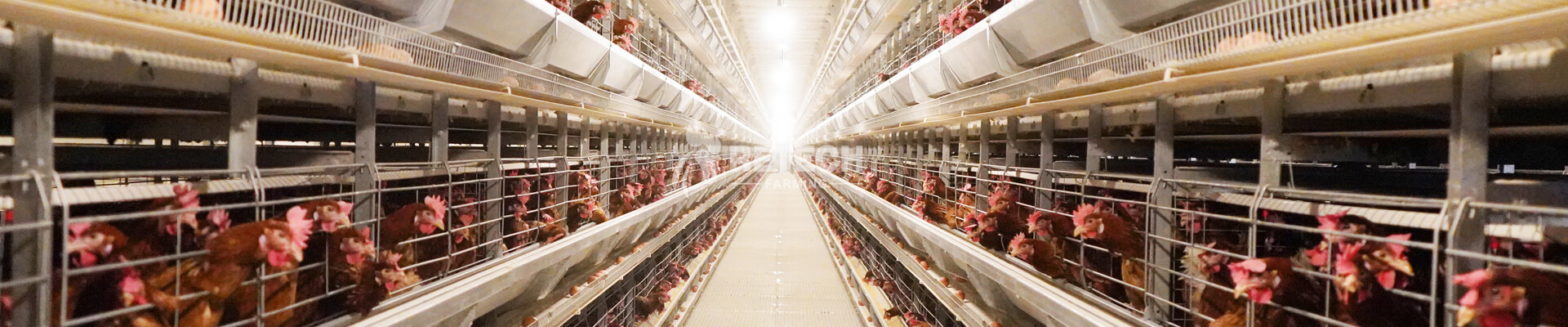
For commercial chicken farms, electricity is not only an operating cost but also a crucial component of farm animal welfare and production systems. Ventilation fans, water pumps, environmental controllers, lighting, feed lines, egg handling equipment, and manure removal equipment all require a reliable power supply.
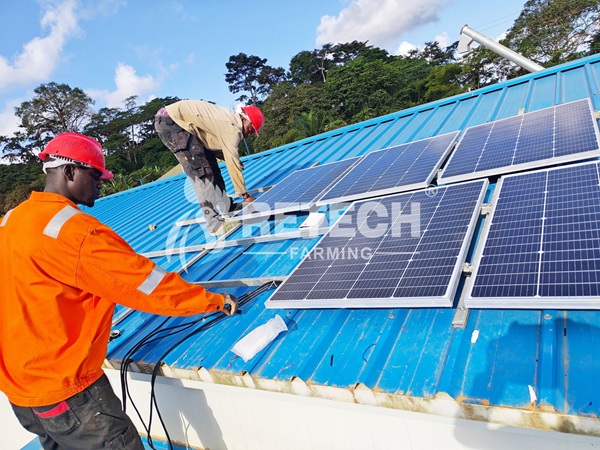
Electricity challenges faced by poultry farms in Africa include:
* Unreliable power supply
* Lack of power availability
* Frequent power outages
* High electricity costs/high power consumption, and weak grid environments.
So how can these challenges be addressed? A well-designed solar PV system can reduce diesel consumption and improve the stability of the power supply. By analyzing and calculating farm electricity consumption, rationally configuring photovoltaic (PV) capacity and battery storage capacity, and combining this with an EMS (Energy Management System) and control logic, an off-grid microgrid system can be built.
This guide will explain the working principles of solar power systems for poultry farms, how to estimate PV and battery capacity, and factors to consider before investing in such a system.
1.Working Principle of a Solar Power Generation System for Poultry Farms
Retech’s solar photovoltaic system solutions include photovoltaic modules, inverters, lithium iron phosphate (LFP) battery energy storage systems, an energy management system (EMS), protection devices, and grid and diesel generator interfaces as needed. The EMS follows a predetermined priority logic:
Photovoltaic power generation first meets the farm’s load requirements.
Excess solar power can charge the batteries.
When photovoltaic power generation is insufficient, the batteries will discharge to support the load.
When the battery charge reaches a pre-set battery conservation level, the system will automatically switch to grid power or start the diesel generator through ATS as a backup power supply.
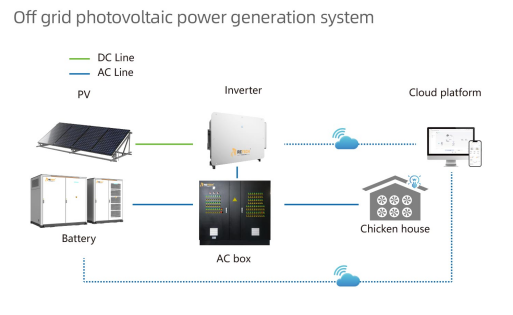
Once solar power generation and battery charge recover, it will automatically switch back to photovoltaic power and shuts down the diesel generator.
System Economics: Photovoltaic design lifespan ≥ 20 years; energy storage design lifespan ≥ 10 years; investment payback period is approximately 2-3 years(The specific payback period of investment depends on the local electricity price and diesel price and raising environment etc. ).
The control system should be configured around priority loads. For poultry farms, these priority loads typically include ventilation fans, environmental controllers, water supply systems, lighting, and necessary feeding equipment. The final priority and switching settings will be confirmed during the engineering design and debugging phases, the logic setting will be done for the customers in advance.
2.Advantages of choosing a solar power system for poultry farms:
1. Farms can achieve self-sufficiency in electricity through photovoltaic power generation, replacing municipal power/diesel generators, with a solar electricity stability rate exceeding 95%;
2. Significantly reduces the operating time of diesel generators, reducing diesel consumption by more than 80%;
3. Independent to the municipal power grid, eliminating the hassle of approval procedures, and ensuring normal farm operations are not affected by municipal power outages.
3.How can I choose the right solar power solution for my farm based on its scale?
Yes, our energy storage solutions can power farms with 5,000-100,000 chickens. Factors such as poultry house design, climate, ventilation strategies, water pumps, lighting solutions, feed systems, future expansion plans, and generator capacity etc. significantly influence the final design.
| Chicken farm scale | Preliminary photovoltaic reference | Preliminary battery capacity reference |
| 5,000-20,000 chickens | 70kWp PV | 1* 50~240kWh rack-mounted LFP battery |
| 20,000-30,000 chickens | 90kWp PV | 1* 125kW/261kWh commercial/industrial energy storage unit |
| 30,000-50,000 chickens | 180kWp PV | 2* 125kW/261kWh commercial/industrial energy storage units |
| 50,000-60,000 chickens | 280kWp PV | 3* 125kW/261kWh commercial/industrial energy storage units |
| 60,000-100,000 chickens | 400kWp PV | 4* 125kW/261kWh commercial/industrial energy storage units |
| 100,000 chickens and above | 800kWp PV | 8* 125kW/261kWh commercial/industrial energy storage units |
Request a solar energy solution for egg-laying chicken farms
The grid-connected scheme aims to cover daytime electricity consumption. The hybrid scheme prioritizes operational continuity and reduced diesel consumption; it utilizes stored energy in the battery after solar power generation declines in the evening or raining days before utilizing the backup power like grid power and diesel generator.
4. What information is needed to design a solar power system for a chicken farm?
Before selecting equipment, Retech’s engineering team collects electricity information for the chicken farm, including the following aspects:
4.1 Farm Information–provided by RETECH team
* Country/Region of Project
* Number of Chickens
* Layer Chicken Farm, Broiler Farm, or Grower Farm
* Number of Chicken Houses
* New or Existing Farm
* Future Expansion Plans
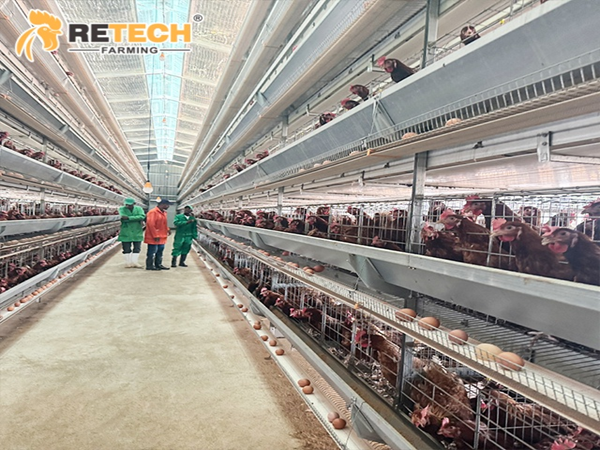
4.2 Electricity Information
* Average Daily Electricity Consumption–provided by RETECH
* Peak Electricity Consumption–provided by RETECH
* Existing Grid Capacity
* Frequency and Duration of Power Outages
* Diesel Generator Capacity
* Current Electricity Price
* Diesel Price
4.3 Chicken House Equipment–provided by RETECH team
* Number and Power of Ventilation Fans
* Cooling System
* Environmental Controller
* Water Pumps
* Lighting
* Feeding System
* Egg Collection System
* Manure Removal System
* Other Electrical Equipment
4.4 Installation Information
* Available Rooftop or Ground Area
* Preferred Installation Location for the Solar System
* Local Installation Conditions
* Existing Power Infrastructure
The more complete the information, the more accurate the design for the solar and energy storage systems will be. We will provide you with a more comprehensive power generation and energy storage solution.
5. Photovoltaic power generation project scheme: Abuja 40,000 broiler chicken farm.
The following project data is provided by Retech Farming. Actual power generation, solar contribution rate and investment payback period may vary depending on local irradiance, weather, load curve, electricity price structure, diesel price, installation conditions and operation mode.
| Project | Operational Data |
| Location | Abuja, Nigeria |
| Farm Productivity | 40,000 broiler chickens |
| Farm Energy Usage | Daily electricity consumption: 454.4 kWh, including electricity used in poultry houses and staff dormitories. |
| Peak Load of Poultry House | 44.3 kW |
| Photovoltaic Power Generation Capacity | 183 kWp |
| Battery Storage | Two 125 kW/261 kWh commercial and industrial energy storage units |
| Photovoltaic Power Generation | 701.2~918.7 kWh/day, with approximately 252.6 kWh used during the daytime load, and the remaining photovoltaic power stored in the energy storage units. |
| Operational Design | The photovoltaic system operates off-grid normally, serving as the primary energy source for the farm, supplemented by grid power, and with diesel generators as a backup. The three power sources complement and reinforce each other. |
| Operational Results | For approximately eight months of the year, the plant relies on solar energy for energy self-sufficiency, with the grid/diesel generator primarily used for backup during prolonged periods of low sunshine. The plant requires approximately 951 kilowatt-hours of electricity annually from the grid or generators. |
| Energy Cost Comparison Example | The cost of a combined grid power supply and diesel generator is 0.29 USD/kWh, while the cost of powering the photovoltaic and energy storage system is 0.21 USD/kWh. |
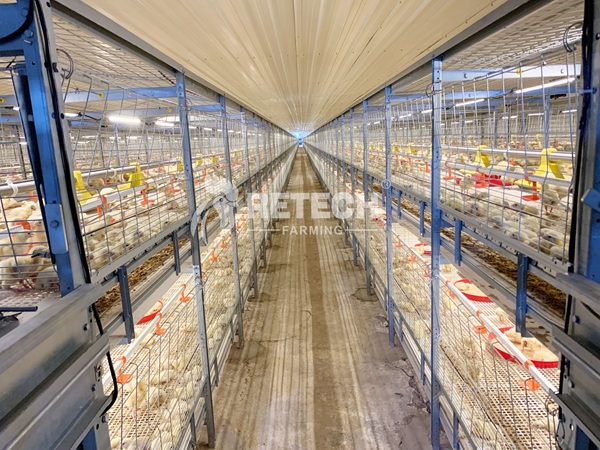
6. Analysis of Photovoltaic Power Generation Scheme for a 30,000-Laying-Chicken Farm in Nigeria
Solution A: Economical Grid-Connected Photovoltaic System
This is a low-investment solar power generation scheme for poultry farms with stable grids but high electricity costs. The photovoltaic system generates electricity during the day time, directly powering the farm. Since it does not include batteries, its design aims to reduce electricity purchases cost rather than provide power during grid outages .
1. Photovoltaic Module System
Specifications: 600~720W Brand New Grade A Monocrystalline Silicon Modules from Leading Brands
Packaging Quantity: 36 or 33 cells per tray
Area: 2.7㎡ or 3.1㎡ per cell
2. Inverter
Specifications: 20~150kW Three-phase Grid-Connected Inverter
3. Recommended Installation Method: Ground mounting or roof mounting
4. Estimated Price: Contact me for a quote
Solution B: Off-Grid Standalone Hybrid PV System
This option is designed for farms with unreliable public power supplies, potential power outages lasting several hours, or high operating costs for diesel generators. It combines PV power generation, battery energy storage, and an energy management system (EMS). Grid power and diesel generators can still serve as backup power, thus providing farms with multi-layered power security rather than relying on a single source.
1. PV Module System
Specifications: 600~720W first-tier brand monocrystalline silicon modules
Packaging Quantity: 36 or 33 cells per tray
Area: 2.7㎡ or 3.1㎡ per cell
2. Inverter
Specifications: 10kW~125kW three-phase hybrid inverter
3. Energy Storage Battery
Specifications: 50kWh~240kWh rack-mounted LFP cells; 125kW/261kWh commercial/industrial energy storage cabinet.
4. Backup Diesel Generator Set
Specifications: Three-phase diesel generator + STS/ATS double-switch switch + remote start module
5. Recommended Installation Method
Ground mounting or roof mounting
6. Estimated Price: Customized solutions, customized pricing
Economic Analysis: Grid-connected Photovoltaic Power Generation vs. Off-grid Photovoltaic Power Generation
| Comparison of | Option A: Economic Grid-Connected Photovoltaic Power Generation | Option B: Off-grid independent hybrid photovoltaic power generation |
| Power Supply Rate | 40%~60% | Over 95% efficiency |
| Expected Payback Period | Approximately 1~2 years | Approximately 2-3 years |
| System Components | PV + Inverter | PV + energy storage + EMS energy management system + STS control cabinet |
| Solution Features | Reduced Electricity Costs | Stable power supply |
| Cost Per kilowatt-hour (compared to mains power cost) | Savings of 56% | Savings 27%-48% |
| Application scenarios | Suitable for areas with stable mains power supply and low electricity costs. | Suitable for areas with unstable mains power supply or no mains power. |
7. What is the cost of a solar system for a chicken farm?
There is no fixed, reliable price for a solar system for a chicken farm. The total project cost depends on:
* Photovoltaic power generation capacity
* Battery capacity
* Inverter capacity
* Installation structure
* Electrical protection equipment
* Generator integration
* Transportation
* Local labor
* Civil engineering
* Monitoring system
Therefore, providing a quote for a specific project is more meaningful than providing a general unit price. Please contact me for preliminary designs and quotes!
8.Why Choose Retech’s Photovoltaic Power Generation System Solution?
Retech Farming is a poultry equipment manufacturer and integrated farm solutions provider. We will provide you with a customized renewable energy power generation and storage solution based on your farm’s actual electricity needs, local sunshine conditions, available installation area, and backup power requirements.
1. Stable and Reliable Equipment, Single-Person Operation and Maintenance
Mainstream brand components, 1 year quality guarantee, lifetime after-sales service.
The solar power generation system, combined with grid power and a generator, forms a power supply group to ensure stable power supply to the farm.
2. Customized to Actual Electricity Needs, Avoiding Cost Waste
Designing reasonable power generation for customers, ensuring that electricity consumption is not over-designed, and matching the solar power generation system with the farm’s electricity consumption.
3. One-Stop Solution Delivery, Reducing Compatibility and Management Risks
Retech provides a one-stop solution. All photovoltaic system components are sourced from the same supplier, reducing confusion regarding component compatibility and maintenance responsibilities.
4. Intelligent Monitoring and Remote Operation and Maintenance
All equipment data is uploaded to the cloud, allowing you to monitor the system’s operating status at any time via a webpage or app.
Please send us your electricity load list so we can provide initial recommendations for PV, battery, and generator backup power.
9.FAQ
Q1. What type of battery is it: lead-acid or lithium?
A: Lithium battery.
Q2. What is the battery’s lifespan and warranty period?
A: Energy storage grade LFP, DOD 90%, design charging and recharging cycles: 6000+ cycles, design life time 10-15 years; standard warranty: 1 years, remaining rating capacity ≥70-80% after 5 years.
Q3. What are the materials and types of photovoltaic panels?
A: Monocrystalline silicon bifacial N-type half-cell modules.
Q4. Is the system automatically or manually switching between mains power and diesel generator power? What is the switching time?
A: Automatic switching, switching time ≤20ms.
Q5. Is it compatible with existing diesel generators?
A: No, diesel generators require integrated commissioning and must be purchased from us as part of the system.
Q6. What is the power supply sequence for the load within the system?
A: ① Photovoltaic ② Energy storage cabinet ③ Mains power ④ Diesel generator
Q7. How is the photovoltaic system maintained?
A: Routine maintenance only requires cleaning the cooling fans of the ESS cabinet and observing the equipment’s operating status and sounds during inspections, while also avoiding of water damage.
Q8. Does Retech provide installation and after-sales service?
A: We provide complete installation drawings and work instructions; we can send engineers going overseas for on-site installation and commissioning, and also provide remote technical guidance. Furthermore, we offer a comprehensive after-sales guarantee system: 1-year warranty for solar system, 12-year material and workmanship warranty on photovoltaic panels, and 30-year linear power warranty.
For solar photovoltaic power supply solutions for chicken farms, contact retechchickencage
WhatsApp:+8617685886881
Email:director@retechfarming.com
Post time: Nov-10-2026


