
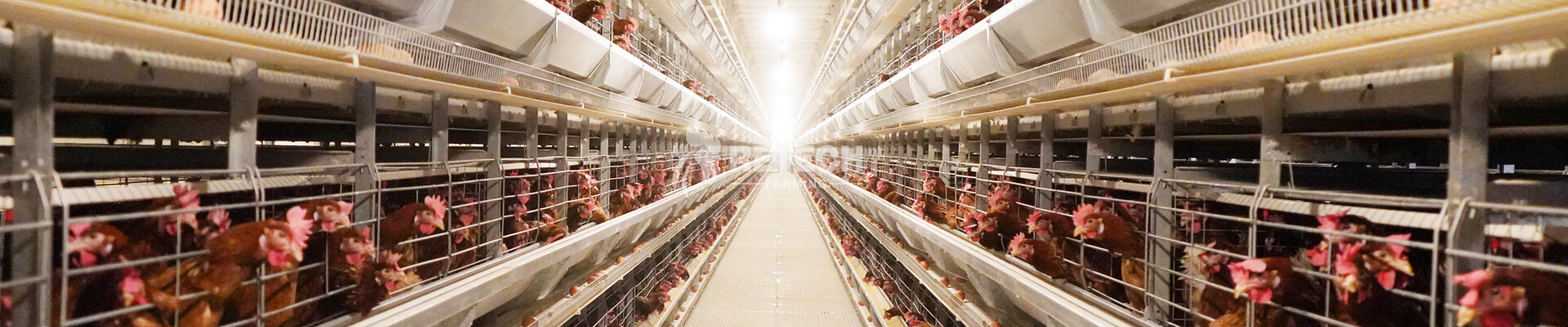
Today, I would like to delve into the design and installation process of the ventilation system, specifically focusing on how to design an efficient system to ensure the health of the chicken flock, maximize the feeding efficiency, and reduce energy costs.
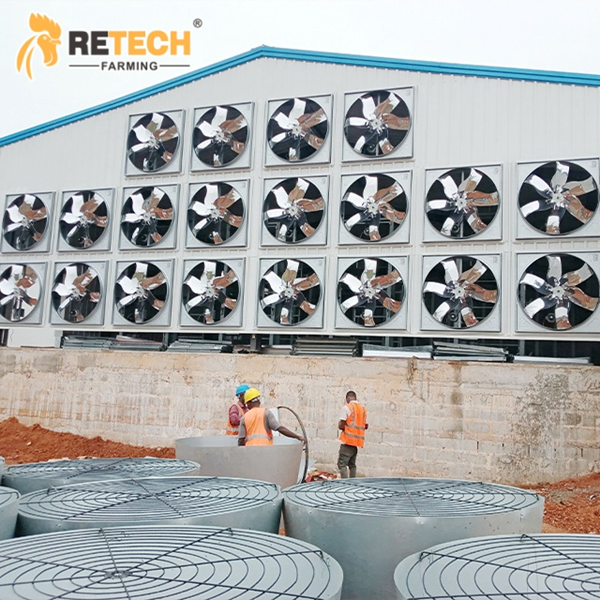
In modern poultry farming, the ventilation system is the core infrastructure of the farm. It is not merely about “blowing air”, but rather a key factor in regulating temperature, humidity, ammonia concentration, and oxygen levels, helping the flock avoid heat stress, respiratory diseases, and improving overall production performance. According to industry figures, an efficient ventilation system can increase the survival rate of chickens by 10-15% and reduce energy consumption by more than 20%. As a manufacturer specializing in poultry equipment, we have installed customized systems for hundreds of farms, helping them achieve sustainable development and higher ROI. Now, I will share the key elements for designing an efficient ventilation system, including the location of air inlets, fan types, size calculation, and control systems. I hope these insights will provide practical guidance for optimizing your farm!
I. Why is ventilation important for poultry farming?
An efficient ventilation system primarily performs the following core functions:
1. Regulating temperature and humidity: Removing hot and humid air and introducing fresh, cool air to avoid heat stress and respiratory diseases caused by high humidity.
2. Excluding harmful gases: Continuously removing harmful gases such as ammonia, carbon dioxide, and hydrogen sulfide produced by the chickens’ breathing and decomposition of feces. These gases have a strong stimulating effect on the chickens’ respiratory tracts.
3. Supplementing fresh oxygen: Ensuring adequate oxygen in the shed to promote the chickens’ metabolism and increase growth rate.
4. Removing dust and pathogenic organisms: Reducing the concentration of dust and suspended pathogens in the air, reducing the risk of respiratory diseases.
5. Improving bedding quality: By removing moisture, it helps maintain dry bedding, inhibiting bacterial growth.
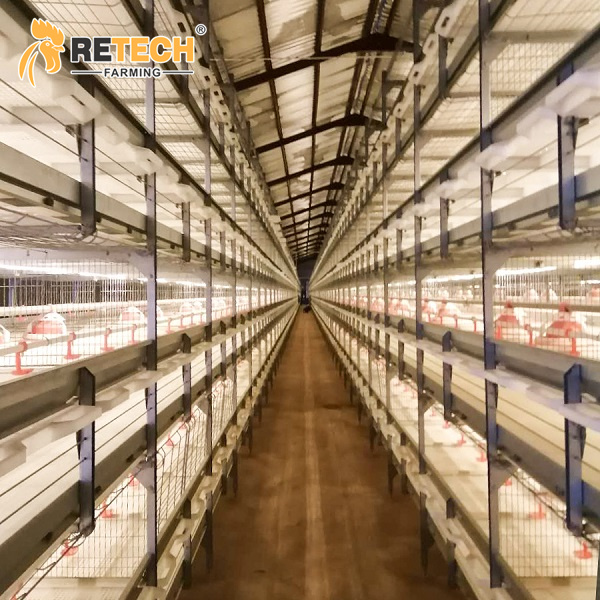
II. Key elements for designing an efficient ventilation system
A successful ventilation system is not simply installing fans; it requires a scientific and systematic design.
1. Air Inlet Placement & Type:
The air inlets are the entry points for fresh air into the chicken house, and their design directly affects the distribution and mixing of air within the shed.
1.1 Location:
- Winter/Minimum Ventilation: Usually, the inlets are placed at a higher position to allow cold air to rise and mix with the hot air in the shed before slowly descending to the chicken area, avoiding cold air directly hitting the chickens and causing stress.
- Summer/Tunnel Ventilation: Usually, they are placed at the front or side of the chicken house, forming convection with the fans to guide air to flow uniformly along the length of the shed.
1.2 Type:
- Side Wall Inlets: Commonly with deflector plates, the inlet positions are adjusted by controlling the angle of the deflector plates to regulate the direction and speed of the incoming air.
- Skylight/Top Inlet: Usually used for winter ventilation, using negative pressure to draw in outdoor air and spray it upwards, mixing with the hot air.
- Cooling Pads: In hot summer, cooling pads are used in conjunction with fans, with the inlets directly located opposite the cooling pads, using evaporation to cool while providing fresh air.
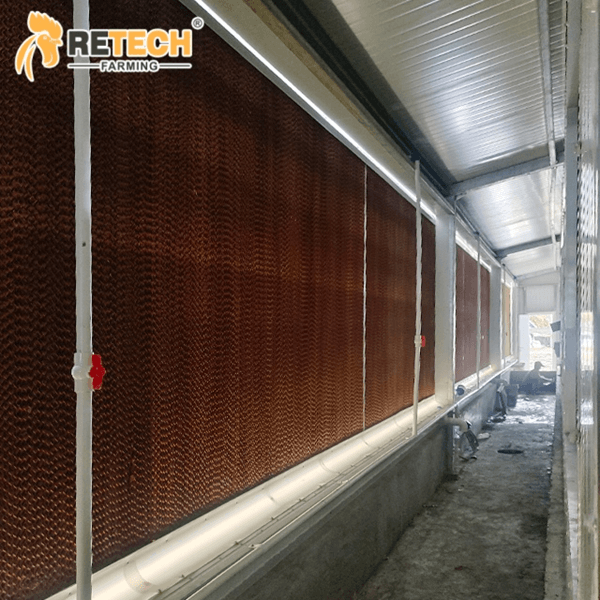
Key Principles: Ensure uniform air distribution and avoid dead zones and excessive wind speed in certain areas. The number and total area of the inlets should match the fan’s suction volume to maintain an appropriate negative pressure.
2. Fan Types & Selection:
Fans are the core power source of the ventilation system, and their selection directly affects ventilation efficiency and energy consumption.
2.1 Main Types:
- Tunnel Fans: High air volume and efficiency, usually installed at the end of the chicken house, used for tunnel ventilation in summer when temperatures are high, quickly lowering the temperature in the shed.
- Cross Ventilation Fans / Side Wall Fans: Used in small chicken houses or in conjunction with tunnel ventilation during transitional seasons to provide lateral airflow.
- Circulation Fans: Small fans installed inside the chicken house to mix the air inside the house and eliminate temperature stratification, especially during winter or transitional seasons.
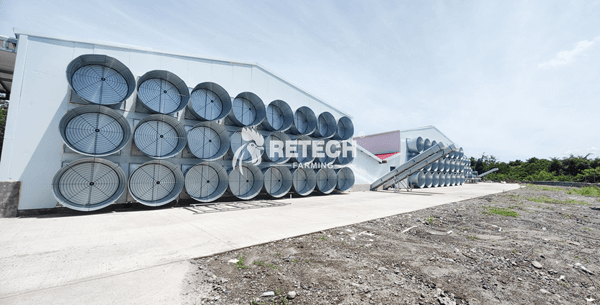
Selection considerations:
- CFM/CMH: Calculate the total required air volume based on the size of the chicken house, the number of chickens, and local climate conditions.
- Static Pressure Efficiency: The actual air discharge capacity of the fan under a certain static pressure. High-efficiency fans can output a larger volume of air while maintaining negative pressure.
- Energy Efficiency: Choose fans with high energy efficiency to significantly save electricity costs during long-term operation.
- Material and Durability: Consider the corrosion resistance, dust-proof, and waterproof performance of the fan blades, motor, and casing to ensure stable operation in harsh environments.
3. Sizing & Configuration:
Accurate calculation is the foundation for ensuring the efficient operation of the system.
- Ventilation demand: Based on factors such as poultry type, age, quantity, and the highest local temperature, calculate the minimum ventilation volume per hour (in winter) and the maximum ventilation volume (in summer). Usually, the required wind volume per chicken per hour (such as CFM/bird or m³/h/bird) is taken as the benchmark.
- Number and distribution of fans: Calculate the required number of fans based on the total ventilation demand and the wind volume of each fan. Fans should be evenly distributed, especially in the tunnel ventilation mode, to ensure that the airflow covers the entire chicken house.
- Negative pressure control: Reasonable fan and air outlet configuration ensures that the house can maintain a stable negative pressure (usually 0.05-0.1 inches of water column or 12.5-25 pascals) in different ventilation modes, which is the key to guiding the airflow.
- Calculation tools and professional support: Complex calculations usually require professional software or experienced engineers to assist, to ensure the accuracy of the design.
4. Smart Control Systems:
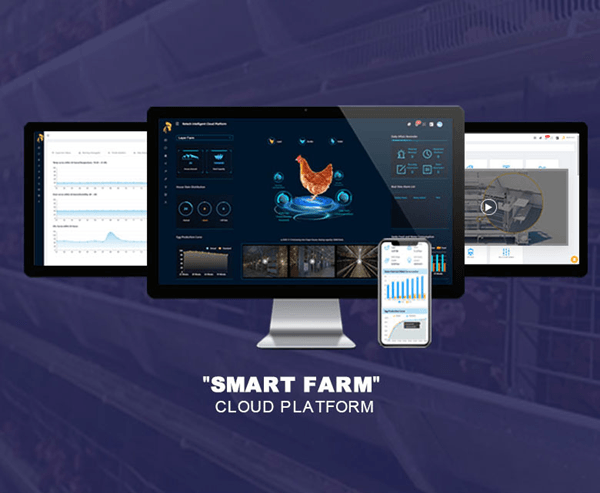
Modern ventilation systems cannot do without intelligent control systems, which are the “brain” for achieving precise environmental regulation.
- Sensors: Precisely monitor key environmental parameters such as temperature, humidity, ammonia, and carbon dioxide concentration in the house.
- Controller: Automatically control the start and stop of fans, their rotational speed, and the opening and closing degree of air outlets and wet curtains according to preset programs and sensor data.
- Graded ventilation mode: Achieve smooth switching and precise control from minimum ventilation (in winter), transitional ventilation to tunnel ventilation (in summer).
- Alarm function: Issue timely alerts when environmental parameters are abnormal or when equipment fails.
- Remote monitoring and management: Support remote viewing and adjustment via mobile apps or computers, significantly enhancing management efficiency.
- Data analysis: Record environmental data to provide data support for breeding management and optimize breeding strategies.
III. System Installation and Commissioning: Ensuring the Implementation of the Design Outcome
Even the most excellent design still requires professional installation and meticulous commissioning.
1. Sealing Inspection: Ensure that all gaps in the chicken coop walls, doors, windows, and air vents are completely sealed to prevent air leakage and maintain stable negative pressure.
2. Fan Installation: Install the fans strictly in accordance with the manufacturer’s instructions, ensuring stability, levelness, correct power connection, and dust-proof and waterproof treatment.
3. Air Vent Installation and Calibration: Ensure that the air vent installation positions are accurate, the guide plates have adjustable angles, and calibration should be conducted under different negative pressures to ensure that the air intake direction and speed meet the design requirements.
4. Sensor Placement: The sensors should be placed at environmental points that represent the areas where chickens are active to avoid direct interference from airflows from the air vents or fans.
5. Control System Commissioning: Carefully set the parameters of each ventilation mode (such as temperature thresholds, negative pressure values, fan startup sequence, etc.), and conduct simulation tests to ensure that the system can operate automatically as expected.
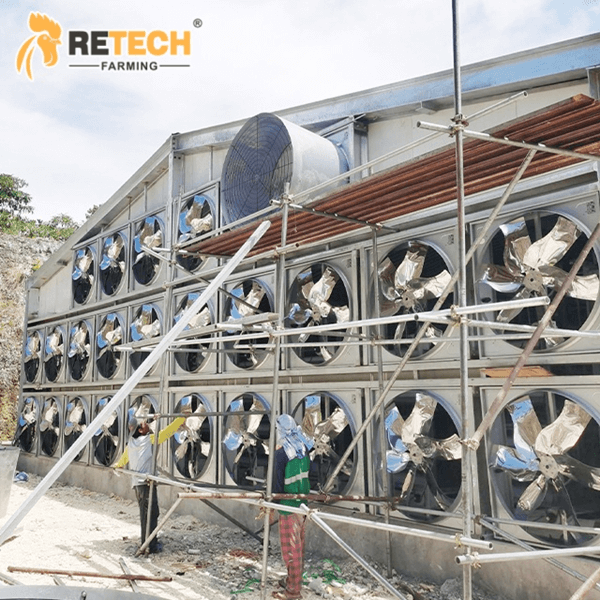
RETECH offers equipment installation services. Please leave your project requirements.
IV. Conclusion: Choose a Professional Partner and Invest in the Future
A well-designed, properly installed, and stable ventilation system not only provides a comfortable and healthy growth environment for poultry, significantly enhancing production efficiency, but is also an indispensable core competitiveness for modern and large-scale livestock farms.
As a service provider specializing in breeding solutions for large-scale farm projects, we are committed to offering global customers a comprehensive solution from design consultation, equipment production to installation guidance. We understand that each farm has unique specific needs, and therefore we provide customized ventilation system designs to ensure the best results.
Investing in an efficient ventilation system is investing in the future of your farm.
Email:director@retechfarming.com
Post time: Mar-30-2026


